Jin Ping Mei
Introduction
Jin Ping Mei, translated as "The Plum in the Golden Vase" or "The Golden Lotus," is a classic Chinese novel from the late Ming Dynasty. It is considered one of the major early works of Chinese vernacular fiction and is noted for its explicit portrayal of sexuality and its intricate depiction of social relations. The novel's title refers to its three central female characters: Pan Jinlian, Li Ping'er, and Pang Chunmei.
Historical Context
Jin Ping Mei was written in the late 16th century and reflects the cultural and social milieu of the Ming Dynasty. It was a period characterized by significant economic growth and cultural flourishing in China, with increased urbanization and the rise of the merchant class. The novel provides insight into the moral and ethical ambiguities of this period and explores themes of power, desire, and societal decay.
Plot Overview
The narrative centers around Ximen Qing, a wealthy but morally corrupt merchant, and his interactions with his numerous wives and concubines, particularly the infamous Pan Jinlian. The story unfolds as a series of vignettes depicting the extravagant and often immoral lifestyle of Ximen Qing and his household. The novel explores themes of lust, greed, and the consequences of unchecked power. Pan Jinlian, one of the primary characters, becomes a symbol of sexual promiscuity and treachery in Chinese culture, largely due to her role in poisoning her husband.
Adaptations and Related Works
The story of Jin Ping Mei has been adapted multiple times. Three notable film adaptations capture the novel's essence, and a ballet dance drama further explores its themes through movement and music. Additionally, Jin Ping Mei inspired the creation of a cookbook, "Pan Jinlian's Dumplings," which presents recipes connected to the novel's characters, offering a culinary perspective on traditional Chinese culture.
Symbolism and Themes
Color symbolism is prominent in Jin Ping Mei, with particular attention to the use of red and green, which were considered attractive during the Ming Dynasty. These colors are often associated with festivity and desire, echoing the novel's exploration of sensuality and opulence. Red shoes, for instance, are featured in the novel as a symbol of seduction and feminine allure.
Character Analysis
Pan Jinlian stands out as one of the most complex characters in the novel. Although historically vilified as a symbol of infidelity and moral corruption, recent interpretations have sought to understand her actions in the context of her oppressive circumstances, offering a more nuanced view of her character. Acclaimed Kunqu Opera actress Liang Guyin famously portrayed Pan Jinlian, highlighting the character's multifaceted personality through her performance.
Artistic Depictions and Legacy
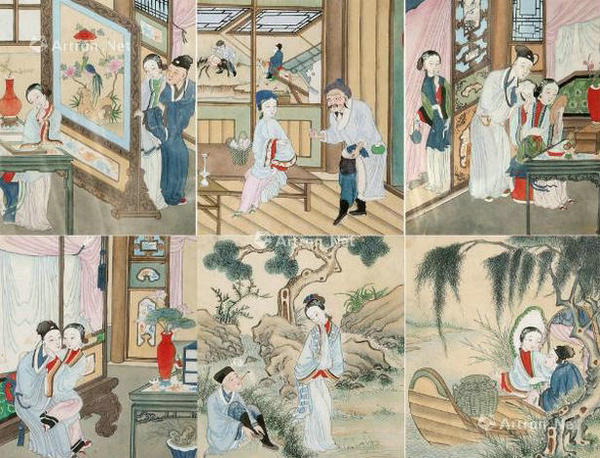
The artistic legacy of Jin Ping Mei extends to various mediums, including the work of late graphic designer Zhang Guangyu, whose illustrations capture the novel's rich tapestry of characters and settings. Zhang's contributions to Chinese art include not only interpretations of Jin Ping Mei but also works inspired by other Chinese classics and cultural themes, showcasing his unique style and influence.
Literary Significance
Jin Ping Mei is renowned for its complex narrative structure, sophisticated character development, and psychological depth. The novel offers a detailed depiction of domestic and social life in Ming China, blending realism with elements of allegory and satire. Its unflinching portrayal of desire, power, and moral ambiguity provides a window into the complexities of human nature and societal dynamics.
As a cornerstone of Chinese literature, Jin Ping Mei has influenced generations of writers and artists. Its enduring appeal lies in its ability to resonate with audiences across time and cultures. Whether through literary analysis, artistic interpretation, or cultural adaptation, the novel continues to inspire and challenge readers worldwide.








